

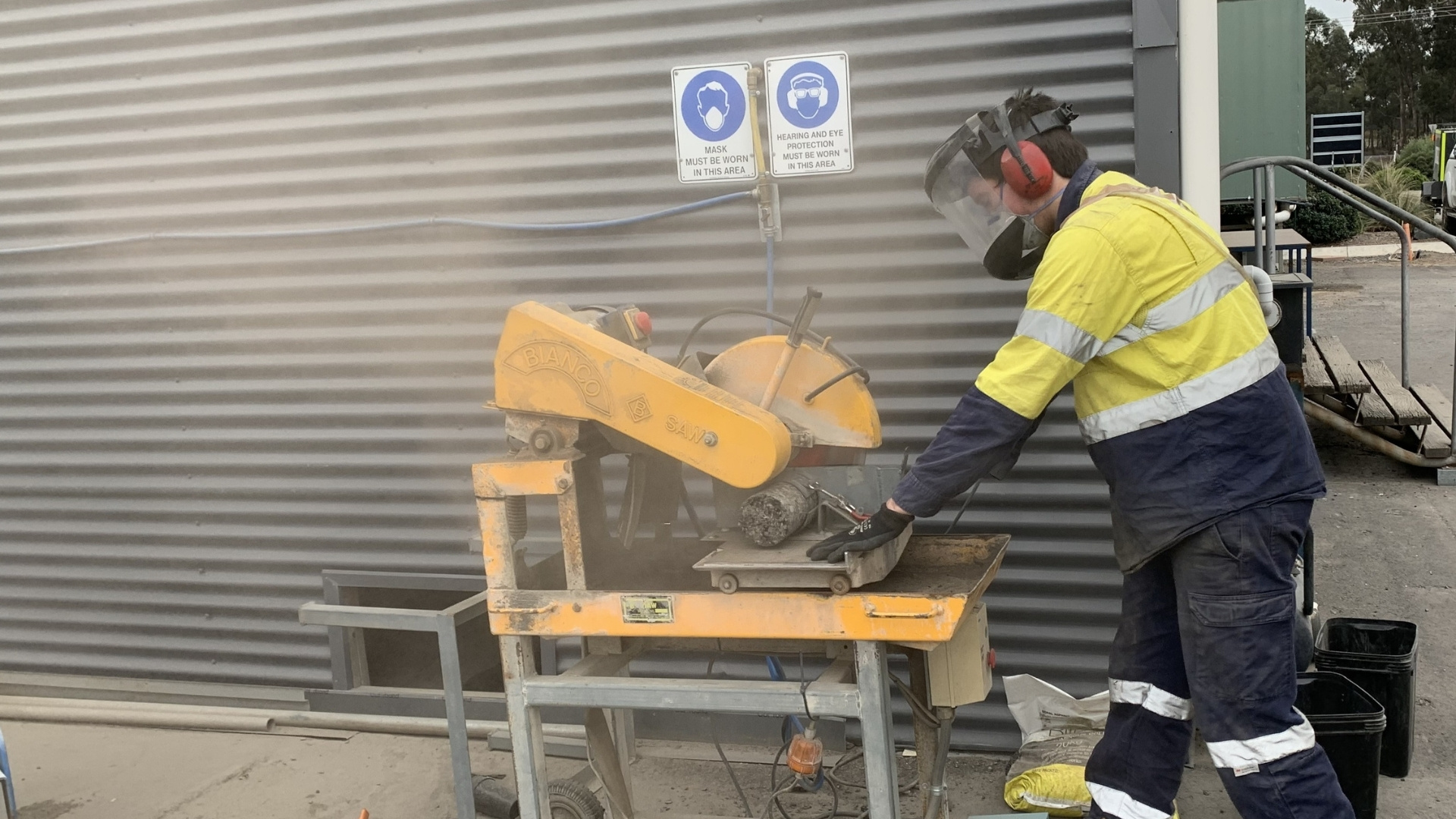
Dust & Silica Monitoring
INTRODUCTION
Silica dust is invisible. It causes silicosis, a fatal, incurable lung disease, and it is entirely preventable. By the time a worker is diagnosed, years of exposure have already occurred and the damage cannot be reversed.
REGULATION SUMMARY
The regulations require employers to ensure workers are not exposed to respirable crystalline silica above the legal limit of 0.05 mg/m³ averaged over an 8-hour shift. If your workers cut, grind, drill, or disturb concrete, brick, stone, masonry, or sand, these obligations apply to you.
WHAT WE DO
Safety Systems provides independent dust and silica monitoring with NATA accredited laboratory analysis, giving you measured results, identified risks, and the evidence that your controls are working.
- Conduct regular air monitoring for silica exposure
- Implement controls starting with elimination
- Keep silica dust exposures below the legal limit
- Provide health monitoring to exposed workers
HOW WE DELIVER
- Personal breathing zone monitoring
- Static area sampling to map dust levels
- Product testing to determine silica content in raw materials
- Respirator fit testing on your site
- Controls review
HOW WE DO IT
- Review your site, tasks, and materials before arriving
- Identify workers with the highest exposure risk
- Fit sampling pumps to workers at the start of shift
- Speak to workers about their tasks and work patterns
- Review current site controls
- Send samples to a NATA accredited laboratory for XRD analysis
- Calculate and interpret results against the legal limit
- Prepare a clear report with findings and recommendations
YOUR SOLUTION
- Measure what your workers breathe
- Every task, every material assessed
- Controls reviewed on the day
- Plain English, ready to act
WHY IT MATTERS
Silicosis is now appearing in workers exposed to silica hazards without adequate controls or monitoring. The disease is irreversible. The exposure was preventable. The employers who failed to monitor and act are now facing prosecution and civil claims. Without monitoring, you cannot confirm your controls are adequate, you cannot meet your obligation to inform and protect exposed workers, and you have no evidence that you took the risk seriously.
- Measured exposure results compared against the current legal limit
- Identification of high-risk tasks, roles, and materials on your site
- NATA accredited laboratory analysis using XRD methods
- A report that stands up to WorkSafe Victoria scrutiny
- Plain English findings your supervisors and workers can understand
- Evidence of due diligence under the regulations
- Practical recommendations to reduce exposure on your site
- Support to act on findings